Impact
Reflection
Recommendations:
Simplify and Streamline: Redesign the reports to focus on simplicity and clarity to make critical data more accessible.
Enhance Customization: Introduce more robust customization options to allow managers to tailor reports to their specific needs.
User Education: Implement training sessions to help managers understand the full capabilities of the reports and how to integrate them into their daily routines.
First, I'd like to express gratitude to the wonderful sponsors. This is exactly how you support students, now that I have a full-time job I'm even more impressed with the folks at Microsoft who were willing to have early morning meetings twice a week all summer! Our mentors went above and beyond with the introductions to facilitate interview recruitment. Overall, it was an absolute delight!
Managing schedules and assignments doesn't have to be complicated. Call me a radical but I didn't use a scrum board or Jira and everything turned out fine!
Burnout is a real concern for most employees but Microsoft seems to be doing surprising well in supporting individual contributors. "No Meetings Fridays" doesn't happen overnight, it takes an incredible amount of mindfulness and empathetic design to implement such a policy.
Throughout the project the biggest challenge faced was gaining access to files. Company property shouldn't feel more secure than sensitive personally identifiable information (PII). Security protocol is a huge pain point for collaboration, especially among interns/student researchers.
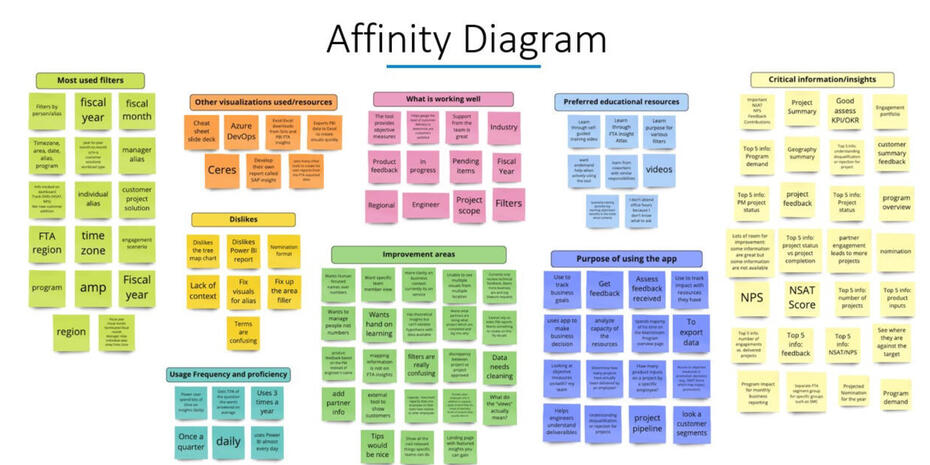
The interviews revealed that while the Power BI Manager Reports are functional, they do not align well with the managers' workflows and preferences, which impacts their adoption.
Detailed Insights:
Information Overload: Managers felt overwhelmed by the density of data presented, which often obscured critical insights.
Lack of Customization: There was a significant demand for customizable reports that could adapt to varying managerial needs and preferences.
Future Directions:
Explore a longitudinal study to track changes in adoption and satisfaction over time.
Consider a broader study involving other tools used by managers to provide a more holistic understanding of their needs and preferences.