Covid
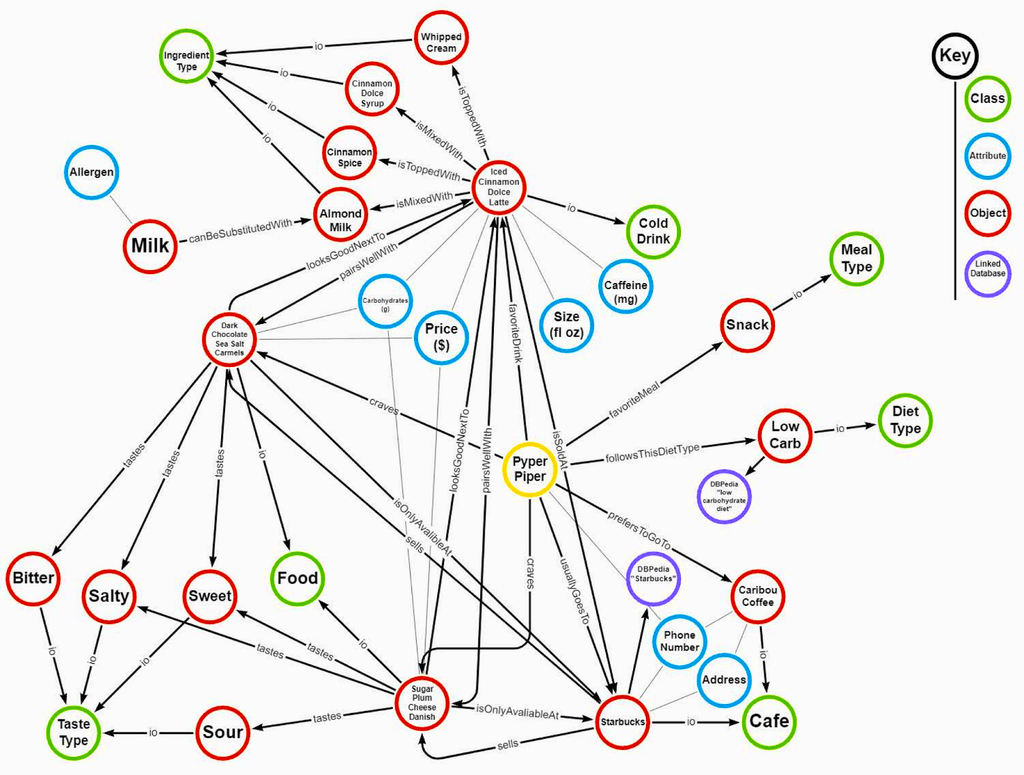
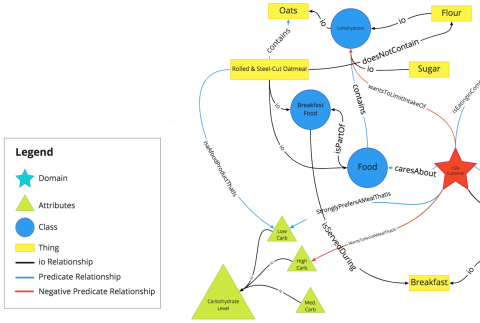
Discover how DBpedia and linked datasets recommend items like Orange Mocha Frappuccino.
Class Project
Taxonomy
Ontology
Card Sorting

The Process
Card Sorting to Refine the Information Architecture
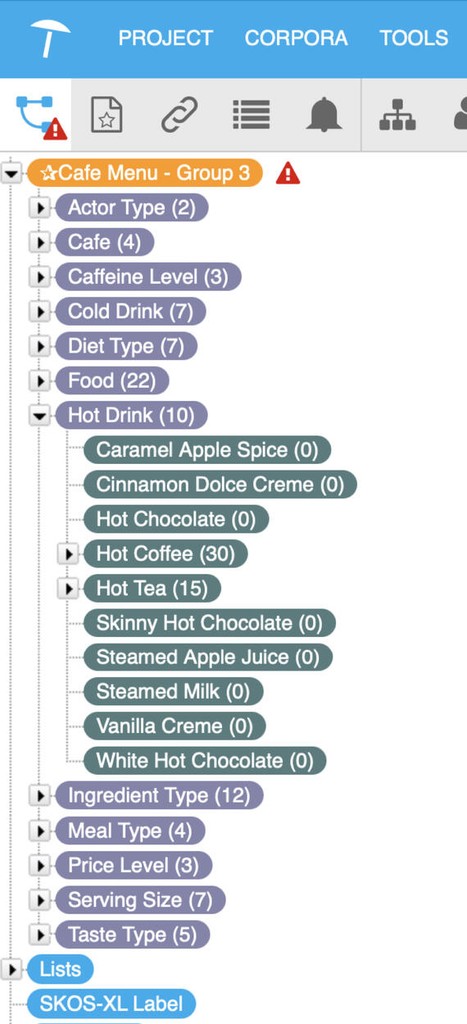
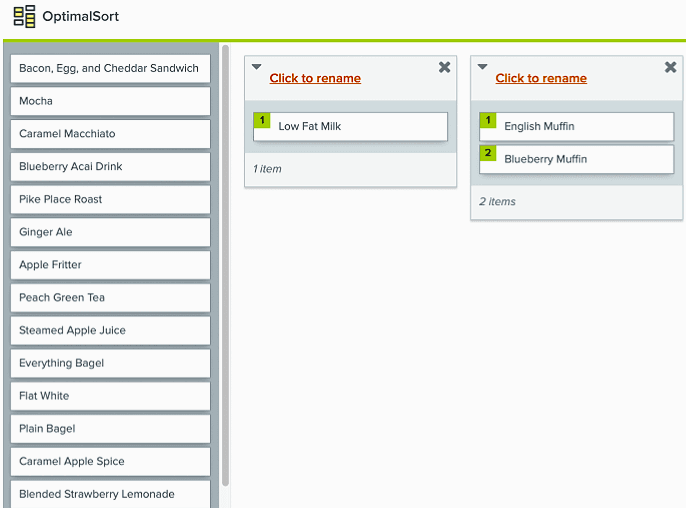
Card sorting was utilized to refine the taxonomy and ensure the logical grouping of information. Several rounds of card sorting were conducted with diverse user groups, including potential app users and stakeholders from cafe chains. Participants were asked to organize menu-related terms into categories that made sense to them, facilitating an understanding of user expectations and cognitive models.
The insights gained from card sorting influenced decisions regarding the hierarchy and navigation of the taxonomy. For example, 'Hot Drinks' were separated from 'Cold Drinks' based on user feedback, which highlighted a clear distinction in how these items were perceived.
Project Requirements
The Process
Impact
Understanding User Dietary Needs: How do café customers interact with menu information, and what are their main constraints?
Designing for Nutritional Clarity: What are the essential features needed to ensure dietary information is clear and reliable?
Engagement and Usability: How can we make dietary management as enjoyable as café hopping?
Drag to enlarge
Corpus Analysis for Controlled Vocabulary Development
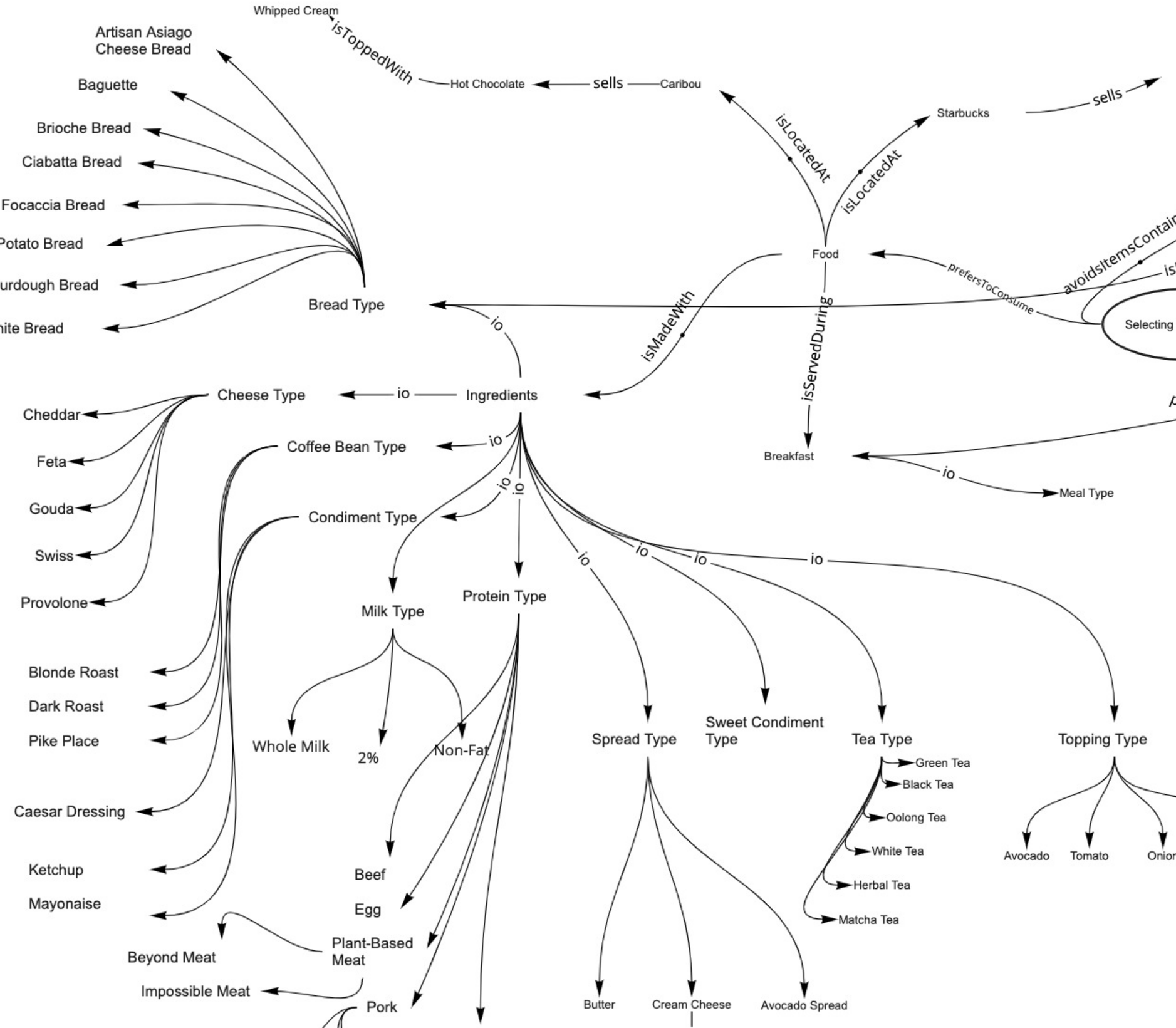
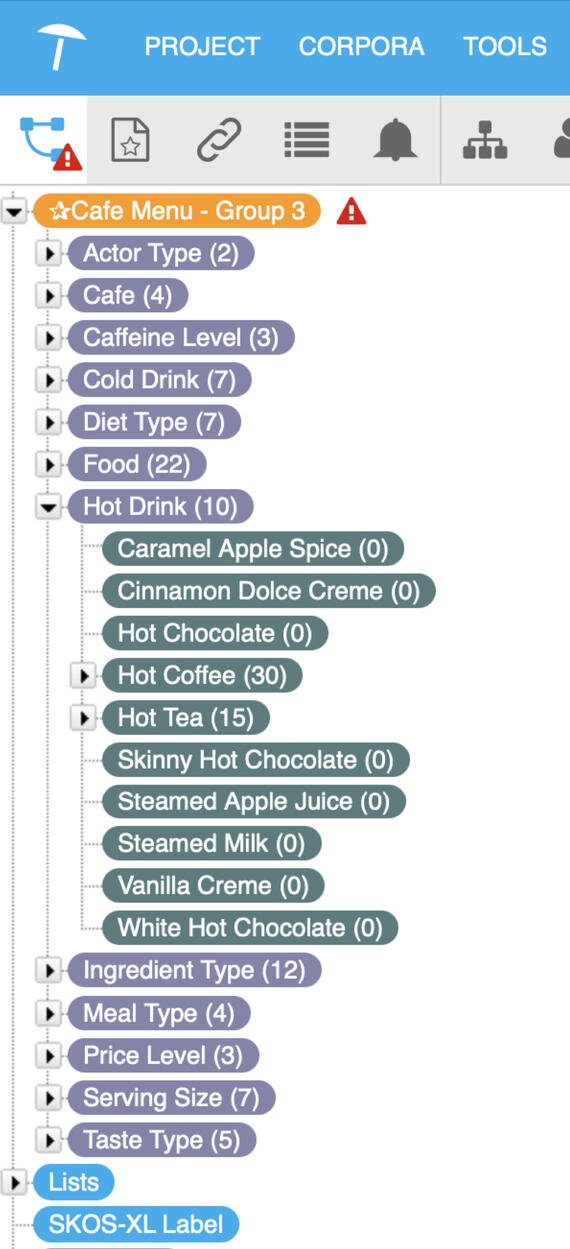
In the initial stages of the project, corpus analysis was employed to develop a controlled vocabulary that accurately represented the diversity of menu items across popular cafes. This involved analyzing a comprehensive dataset from Kaggle, featuring every Starbucks menu item. The process focused on extracting key terms and phrases related to ingredients, nutritional facts, and dietary categorizations.
Card Sorting to Refine the Information Architecture
Card sorting was utilized to refine the taxonomy and ensure the logical grouping of information. Several rounds of card sorting were conducted with diverse user groups, including potential app users and stakeholders from cafe chains. Participants were asked to organize menu-related terms into categories that made sense to them, facilitating an understanding of user expectations and cognitive models.
The insights gained from card sorting influenced decisions regarding the hierarchy and navigation. For example, 'Hot Drinks' were separated from 'Cold Drinks' based on user feedback, which highlighted a clear distinction in how these items were perceived.
User Interviews to Create Unique Personas
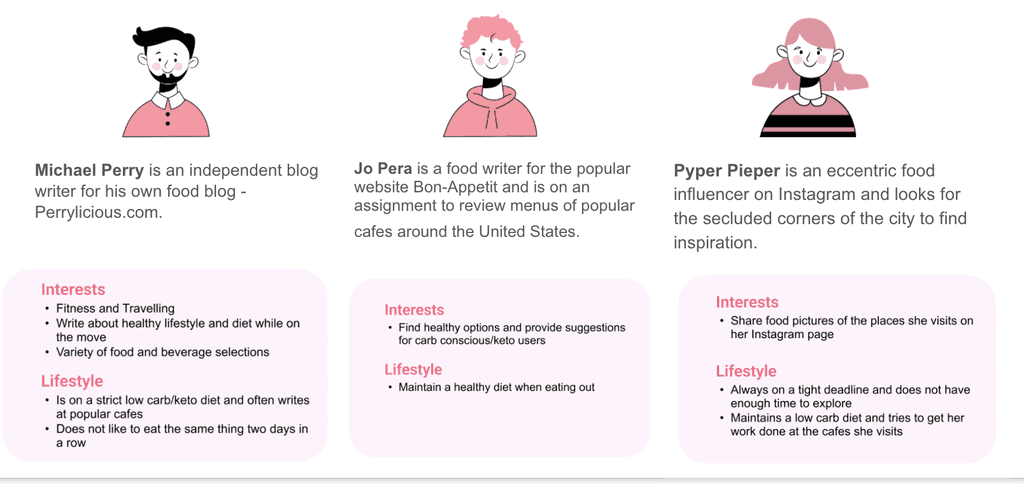
User interviews were crucial in understanding the needs and preferences of individuals on a low-carb diet, particularly regarding dining out and using a cafe menu app tailored to their needs. These interviews validated assumptions, refined personas, and provided insights into user interactions with the app. Feedback from the interviews directly influenced the app's functionality and usability, ensuring it met the practical needs of users.
The implementation of the knowledge graph prototype for the cafe menu app tailored to low-carb dieters demonstrated the potential for improving user satisfaction, particularly among those adhering to strict dietary regimens. While a full product was not developed, the prototype served as a valuable proof of concept, highlighting the feasibility of dynamically catering to diverse dietary needs in a cafe setting. This project emphasized the importance of a user-centered design approach, showcasing how direct user feedback can inform the development of practical solutions that address specific user needs.
Develop a user-friendly, efficient, and scalable prototype that enables café patrons to easily find suitable low-carb food options based on an intuitive taxonomy and ontology system.
Drag to enlarge
Drag to enlarge
Drag to enlarge
Drag to enlarge
Drag to enlarge
Enhancing Low-Carb Café Menus with Taxonomy